


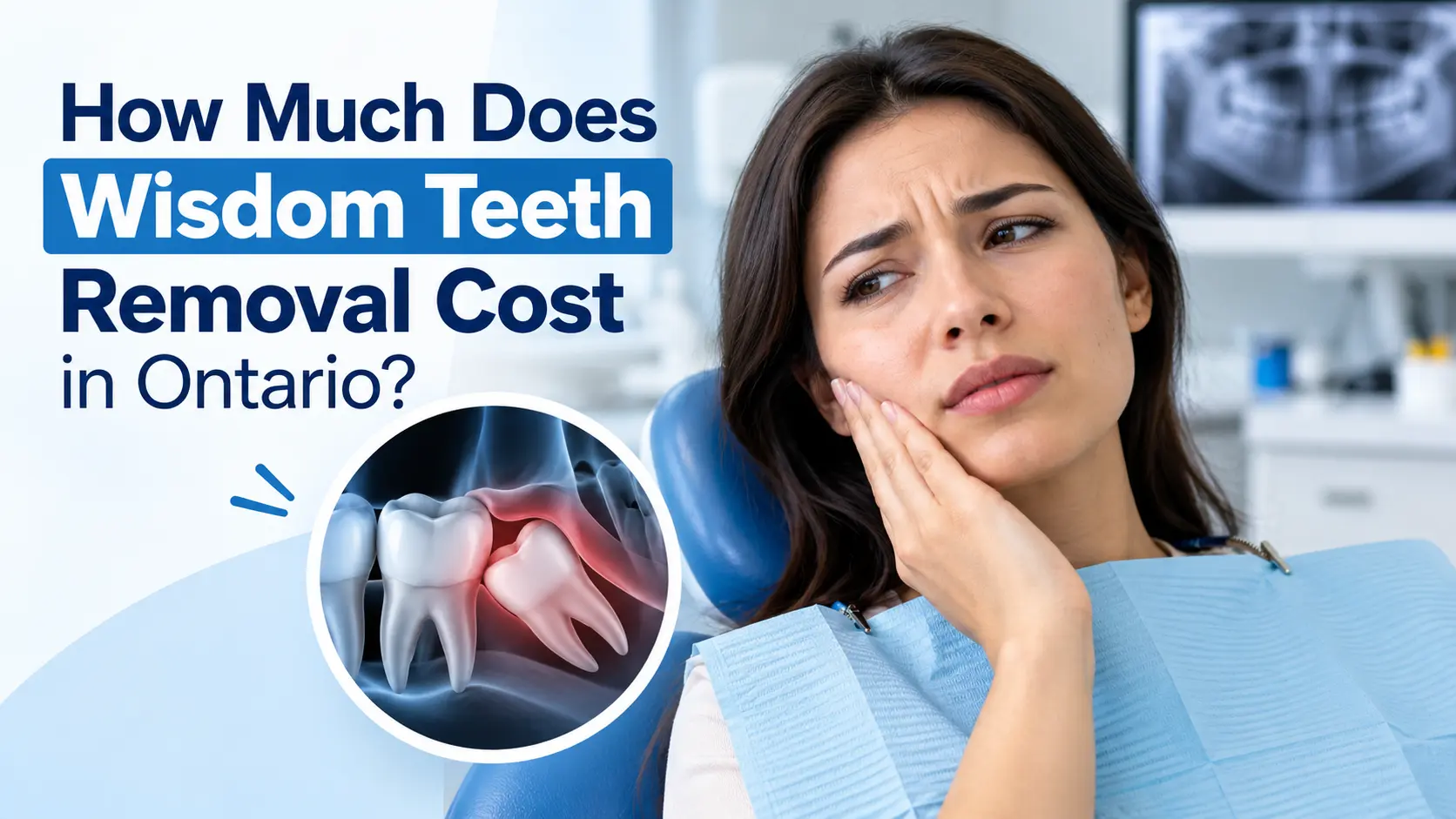
Wisdom teeth often appear during the late teenage years or early adulthood. For some people, they grow normally and cause no problems. For others, there may not be enough room for them to come through properly. This can lead to pain, swelling, infection or pressure on nearby teeth.
If your dentist has recommended removing one or more wisdom teeth, one of your first questions may be: how much does wisdom teeth removal cost?
The total cost in Ontario depends on several factors, including the position of the tooth, the complexity of the extraction, the type of anaesthesia used and your dental insurance coverage. A simple extraction may require less time and fewer resources than surgery to remove an impacted tooth.
What Affects Wisdom Teeth Removal Cost in Ontario?
There is no single price that applies to every wisdom tooth extraction. Your dentist or oral surgeon needs to assess your teeth and explain the treatment required before providing an estimate.
Here are the main factors that can affect the cost.
1. Whether the Tooth Is Fully Erupted or Impacted
A wisdom tooth that has come through the gum and is easy to reach may be removed with a straightforward extraction. The process is generally less complex when the tooth is accessible and can be removed without surgery.
An impacted wisdom tooth is trapped partly or completely beneath the gum or within the jawbone. Depending on its position, the dentist or oral surgeon may need to make an incision or remove a small amount of bone to access it. Surgical removal usually requires more time and planning than a simple extraction, which can affect the overall fee.
2. How Many Wisdom Teeth Need Removal?
Some people need only one wisdom tooth removed, while others may need two, three or all four removed.
Removing multiple teeth during one appointment may affect the total treatment cost differently from scheduling separate visits. However, the final amount depends on the complexity of each extraction, the treatment plan and the anaesthesia required. Ask for an estimate that clearly lists the teeth being removed and the expected cost for each procedure.
3. Dental X-Rays and Examination
Before recommending wisdom tooth removal, your dentist will examine your mouth and may take X-rays to understand the position of the teeth and their roots.
These images help the dental team assess whether a tooth is impacted, how close its roots are to nearby structures and whether specialist care may be appropriate. Ask whether the consultation and required imaging are included in your estimate or billed separately.
4. Local Anaesthesia, Sedation or General Anaesthesia
Local anaesthesia numbs the treatment area so you can remain awake without feeling pain from the extraction itself.
For some patients, sedation or general anaesthesia may be considered because of the complexity of the procedure, anxiety or other clinical needs. These options can involve additional professional services, equipment and monitoring.
Not every patient needs sedation. Your dentist or oral surgeon can explain which option is suitable for your situation and whether it adds to the quoted cost.
Simple Extraction vs. Surgical Wisdom Tooth Removal
Simple Extraction
This may be suitable when the wisdom tooth has erupted sufficiently and can be accessed and removed without surgical exposure.
Surgical Extraction
This may be required when a tooth is impacted, partly covered by gum tissue or positioned in a way that makes removal more complicated. The procedure may involve opening the gum and, in some cases, removing a small amount of bone.
Your dentist will determine the appropriate approach after examining your mouth and reviewing the necessary imaging. A tooth that appears painful does not automatically require surgery, and not every wisdom tooth needs to be removed.
What Should a Wisdom Tooth Removal Estimate Include?
When comparing dental quotes, avoid looking at the extraction fee alone. The total amount may include several services.
Depending on your case, ask whether the estimate includes:
- Dental examination and consultation
- Required X-rays or other imaging
- The extraction or surgical removal fee
- Local anaesthesia or any planned sedation
- Follow-up appointments
- Prescribed medication, if applicable
- Any additional treatment that may be needed
Not every item will apply to every patient. Some may be billed separately, so ask the clinic to explain what is included and what could create an additional charge.
Does Dental Insurance Cover Wisdom Teeth Removal in Ontario?
Dental insurance may cover part or all of an eligible wisdom tooth extraction, but the amount depends on your specific plan.
Your policy may have annual maximums, deductibles, co-payments, procedure limits or rules about the type of extraction covered. Surgical removal, sedation and imaging may also be assessed separately under your plan.
Before booking your procedure, contact your insurance provider or ask your dental office to submit a predetermination request when available. This can help clarify the estimated benefit and your expected out-of-pocket expense.
Keep in mind that a predetermination is an estimate of benefits, not always a guarantee of final payment. The insurer will assess the claim according to the terms of your policy.
Can the Canadian Dental Care Plan Help Pay for Wisdom Tooth Removal?
The Canadian Dental Care Plan (CDCP) includes eligible oral surgery services, including certain tooth removals. However, coverage depends on the specific service, the plan’s rules and your eligibility.
Some procedures require preauthorization, meaning approval must be obtained before treatment. The plan may not pay the full amount charged by a provider, and you could still have co-payments or additional charges.
If you are enrolled in the CDCP, confirm the proposed procedure’s eligibility, whether preauthorization is required and what you may need to pay before agreeing to treatment. You can review the official Canadian Dental Care Plan website.
What Happens During Wisdom Tooth Removal?
Understanding the procedure can make the experience feel more manageable.
Before the Procedure
Your dentist will review your symptoms, medical history and medications, examine your mouth and take imaging if needed. They will explain the recommended treatment, anaesthesia options, risks and expected costs.
If sedation or general anaesthesia is planned, you may receive specific instructions about eating, drinking, arranging a ride home and preparing for the appointment. Follow those instructions carefully.
During the Procedure
The dental team will use the planned anaesthesia to manage pain. With local anaesthesia, you may notice pressure or movement, but you should tell the dentist if you experience pain.
A straightforward extraction may be relatively brief. Surgical removal can take longer depending on the tooth’s position and the complexity of the case.
After the Procedure
Some soreness, swelling and mild bleeding can occur after extraction. Your dentist will provide instructions for protecting the area and supporting healing.
You may be advised to eat soft foods, avoid smoking, keep the area clean as directed and avoid vigorous rinsing or using a straw during the initial healing period. Follow the instructions provided for your particular procedure.
Recovery varies from person to person. A more complex extraction may require more time to heal than a simple one.
Wisdom Tooth Removal in Scarborough
If you live in Scarborough and have questions about wisdom tooth extraction, a dental examination is the best starting point. The appropriate treatment and cost depend on the position of the tooth, your oral health and whether a simple extraction or surgical procedure is required.
Town Centre Dental Clinic in Scarborough can help patients understand their dental concerns and available treatment options. Before proceeding, ask for an explanation of the recommended procedure, the expected fees and whether a referral to an oral surgeon may be needed.
Frequently Asked Questions
How Much Does Wisdom Teeth Removal Cost in Ontario?
The cost varies according to whether the tooth is fully erupted or impacted, how many teeth need removal, the complexity of the procedure and whether sedation is required. A dental examination and written estimate are the best ways to understand your likely cost.
Is Surgical Wisdom Tooth Removal More Expensive Than a Simple Extraction?
It can be. Surgical removal may require more time, specialised techniques and additional resources, especially when a tooth is impacted. Your dentist or oral surgeon can explain the fee based on your specific case.
How Long Does It Take to Recover From Wisdom Tooth Removal?
Recovery depends on the number of teeth removed and the complexity of the procedure. Soreness and swelling are common initially and should gradually improve. Follow your dentist’s instructions and contact them if symptoms worsen or you develop signs of infection.
Conclusion
Wisdom tooth removal costs in Ontario depend on the treatment you need, not simply on the name of the procedure. The position of the tooth, the complexity of removal, anaesthesia and insurance coverage can all affect your final expense.
Before making a decision, arrange an examination, request a written estimate and check your dental benefits. Understanding the costs and the procedure in advance can help you plan with greater confidence and focus on protecting your oral health.