


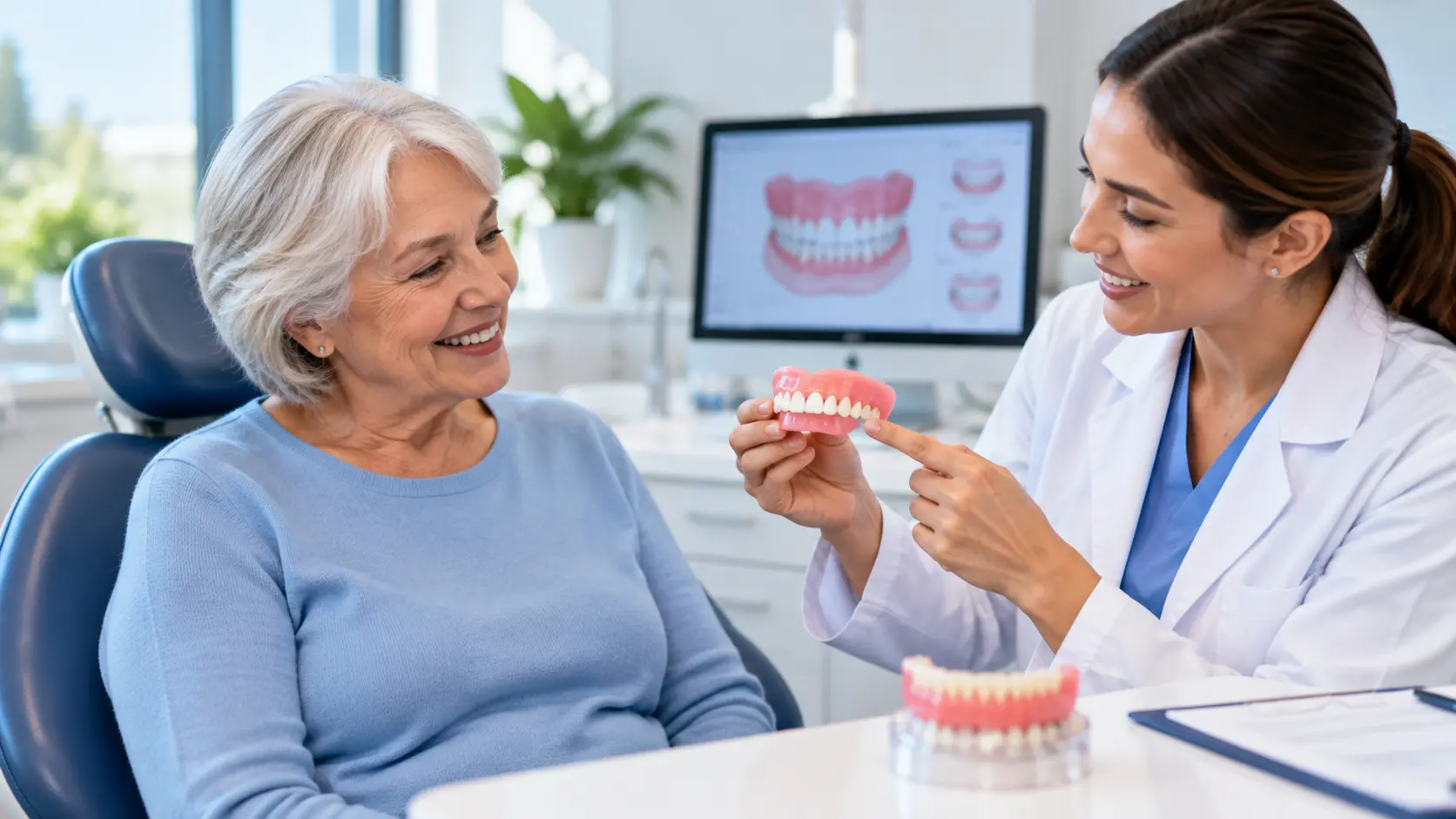
Losing teeth can affect much more than the way your smile looks. Missing teeth can make eating certain foods uncomfortable, change the way you speak and make you feel less confident in everyday situations. For many people, dentures offer a practical way to replace missing teeth and restore everyday function.
However, choosing dentures is not always as straightforward as it sounds. There are different types, designs and treatment approaches, and the right option depends on how many teeth are missing, the condition of your remaining teeth and your overall oral health.
If you are considering dentures in Scarborough, understanding your options before starting treatment can help you have a more informed conversation with your dentist.
What Are Dentures?
Dentures are removable dental appliances designed to replace missing teeth and surrounding oral structures. Depending on your situation, they can replace several missing teeth or an entire arch of teeth.
The two common categories are partial dentures and full dentures.
Partial dentures are generally considered when some natural teeth remain. They fill the spaces created by missing teeth while working alongside the remaining teeth.
Full dentures, also called complete dentures, are designed for patients who have lost all or most of the teeth in one dental arch.
Your dentist can assess your mouth and discuss which type is appropriate rather than choosing an option based only on price or appearance.
Partial Dentures or Full Dentures: Which One Do You Need?
The biggest difference between partial and full dentures is the number of teeth being replaced.
Partial dentures may be suitable when you still have healthy natural teeth that can provide support. They can replace multiple missing teeth without requiring every tooth in the arch to be removed.
Full dentures are designed for situations where all natural teeth in the upper or lower arch are missing or need to be removed because they cannot be restored.
This distinction is important because replacing one or several teeth is very different from replacing an entire arch.
A dental examination is therefore an important first step in any dentures treatment in Scarborough. Your dentist can evaluate your remaining teeth, gums, bite and jaw before recommending an appropriate solution.
What Are Removable Dentures?
Removable dentures are designed to be taken out by the patient. This allows you to remove them for cleaning and follow your dentist’s instructions for overnight care.
For people who have several missing teeth, removable dentures can provide a non-permanent tooth replacement option without requiring a fixed restoration for every missing tooth.
If you are searching for removable dentures in Scarborough, it is worth discussing more than just the appearance of the denture. Fit, comfort, stability, speech and your ability to eat comfortably all matter.
A well-designed denture should feel natural and function comfortably as you become accustomed to wearing it.
What Should You Consider Before Choosing Dentures?
There is no single denture solution that is perfect for everyone. Several factors can influence which option makes sense for you.
Number of Missing Teeth
The number and location of your missing teeth can influence whether partial or full dentures are appropriate.
Someone missing a few teeth may have very different treatment options from someone who has lost most of the teeth in an arch.
Condition of Your Remaining Teeth
If you still have natural teeth, their strength and overall health need to be considered.
Healthy remaining teeth may provide useful support for a partial denture. If some teeth have significant decay, damage or gum problems, your dentist may recommend addressing those concerns before proceeding.
Comfort and Fit
Dentures need to fit your mouth properly. A poorly fitting denture can move during eating or speaking and may cause irritation.
This is one reason professional assessment and fitting are so important. Your dentist can make sure the appliance is designed around your individual mouth rather than treating dentures as a one-size-fits-all product.
Appearance
Modern dentures can be designed to look natural and complement your facial features. The shape, size and shade of the replacement teeth can all contribute to the final appearance.
The goal is not simply to replace teeth. It is to create a smile that looks appropriate for you.
Your Budget
Cost is understandably an important consideration.
Searches such as dentures Toronto cost and partial dentures cost in Canada can give you an idea of what people are researching, but the actual cost of treatment can vary considerably.
The final price may depend on the type of denture, the number of teeth being replaced, preparation procedures, materials and whether additional dental treatment is required.
If you are wondering how much full dentures cost in Ontario, the best approach is to ask for an individualized assessment rather than relying on a single online price.
Dentures vs Other Tooth Replacement Options
Dentures are not the only way to replace missing teeth.
Depending on your oral health, you may also be able to consider dental bridges or dental implants.
A bridge is a fixed restoration that uses neighbouring teeth to support replacement teeth. Bridges vs partial dentures can therefore be an important comparison for someone who is missing one or several teeth.
Dental implants are another option. They use implants placed in the jaw to support replacement teeth and can be used in different restorative situations.
The right choice depends on your individual circumstances. Factors such as bone health, remaining teeth, oral hygiene, treatment goals and budget can all influence the recommendation.
Rather than deciding based on which option sounds most advanced, discuss the advantages and limitations of each approach with your dentist.
How Long Does It Take to Get Used to Dentures?
Getting used to new dentures can take some time.
At first, they may feel unfamiliar in your mouth. Speaking may feel slightly different, and you may need time to become comfortable eating with them.
Many people gradually become more comfortable as they practise wearing their dentures and follow their dentist’s instructions.
Start with manageable foods and take your time while eating. If your dentures repeatedly cause pain, rub your gums or feel unstable, do not simply put up with the discomfort. Speak with your dental team because an adjustment may be needed.
Caring for Your Dentures
Good denture care is important for both your appliance and your oral health.
Follow the cleaning instructions provided by your dental professional. Dentures should be cleaned regularly to help remove food particles and buildup.
You should also continue caring for your gums and any remaining natural teeth. Having dentures does not mean that your regular oral hygiene routine becomes unnecessary.
Regular dental visits are also useful because your mouth can change over time. Your dentist can check the fit of your dentures and your overall oral health and determine whether adjustments or replacement may eventually be needed.
Why Choose Town Centre Dental Clinic for Dentures in Scarborough?
Choosing a dental clinic for dentures is about more than finding the closest option. You want a team that can assess your oral health, explain your choices and help you understand what to expect from treatment.
At Town Centre Dental Clinic, denture treatment is considered as part of your overall dental needs. Whether you need to replace several missing teeth or require a complete denture, discussing your individual situation with a dental professional can help you make a more informed decision.
The clinic provides personalized dental care in Scarborough and offers a range of restorative services, allowing your dentist to consider dentures alongside other possible tooth replacement solutions.
Frequently Asked Questions About Dentures in Scarborough
Are dentures comfortable?
Modern dentures can be comfortable when they are properly designed and fitted. It is normal for new dentures to feel unfamiliar initially, but persistent pain or irritation should be discussed with your dentist.
Are partial dentures better than full dentures?
Neither is automatically better. Partial dentures and full dentures are designed for different situations. The appropriate option depends mainly on how many teeth are missing and the condition of the remaining teeth.
How much do dentures cost in Toronto?
The cost varies depending on the type of denture, materials, the number of teeth being replaced and any additional dental treatment required. An individualized dental assessment is the best way to understand your expected cost.
Can I eat normally with dentures?
Most people can eat a wide variety of foods after becoming accustomed to their dentures. You may need to start with softer foods and gradually introduce foods that require more chewing.
How long do dentures last?
The lifespan of dentures varies depending on factors such as wear, oral changes, cleaning and how well they are maintained. Your dentist can assess whether your current dentures still fit properly and function effectively.
Can dentures replace all missing teeth?
Yes. Full dentures are designed to replace an entire arch of missing teeth. Your dentist can determine whether full dentures or another tooth replacement option is appropriate for you.
Making the Right Choice for Your Smile
Choosing dentures is an important decision, but you do not have to make it based on online prices or photographs alone.
The right option depends on your teeth, gums, bite, lifestyle, expectations and budget. Partial dentures may work well when some healthy natural teeth remain, while full dentures may be appropriate when an entire arch needs to be replaced. Other options, including bridges and dental implants, may also be worth discussing.
If you are researching dentures in Scarborough, start with a professional assessment. A conversation with your dentist can help you understand your options, expected costs and what treatment would work best for your individual needs.
A comfortable, functional smile begins with choosing a solution that fits your mouth and your everyday life.